
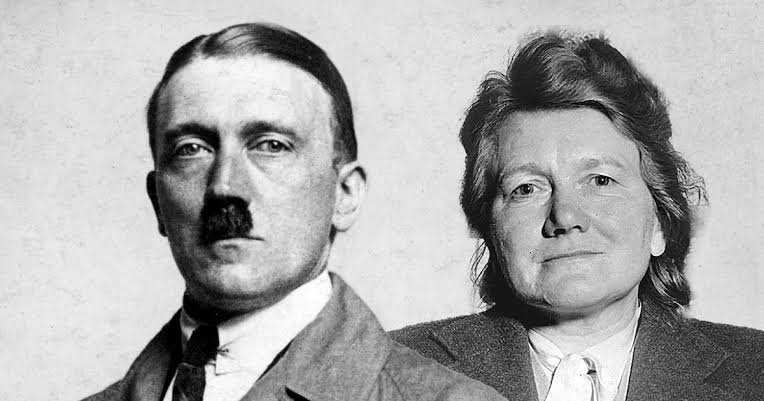
Genealogy searches for Adolf Hitler’s family tree regularly surface the name Elfriede Maria Hochegger. She was not a political figure, not a public personality, and not someone who left a visible mark on history in her own right. Her name appears in databases today almost entirely because of who her mother was.
This article covers who Elfriede was, her birth and death dates, her parents and siblings, her marriage to Ernst Hochegger, her son Heiner, her exact relationship to Hitler, and why her records show minor discrepancies across different genealogy platforms.
Who Was Elfriede Maria Hochegger?
Elfriede Maria Hochegger was born Elfriede Maria Raubal on 10 January 1910 in Linz, Austria-Hungary. She is also recorded under the nickname “Friedl” in some genealogical sources. She lived most of her life as a private individual, away from public attention.
Her death date varies slightly depending on which platform you check. Wikidata, Geni, and Find A Grave list her death as 24 September 1993, putting her age at 83. WikiTree, however, records her death as 27 July 1992 in Sierning, Austria. This kind of minor discrepancy is common in crowd-sourced genealogy databases, where entries are often built from compiled records, cemetery files, and user contributions rather than a single authoritative source.
Elfriede appears across MyHeritage, Geni, WikiTree, Wikidata, and Find A Grave — not because she was famous in her own time, but because of her family connection to one of history’s most scrutinized figures.
Her Parents — Angela Hitler and Leo Raubal
To understand where Elfriede fits in the Hitler family tree, her parents are the essential starting point.
Her father was Leo Raubal, sometimes listed as Leo Raubal Sr. in genealogical records. Her mother was Angela Hitler, later known as Angela Hammitzsch. Angela was born on 28 July 1883 and died on 30 October 1949. She was Adolf Hitler’s elder half-sister, which is the direct link that places Elfriede in Hitler’s family tree.
Angela and Leo Raubal married in 1903 and had three children together. Leo Raubal died around 1910 — the same year Elfriede was born — leaving Angela a widow with very young children. Angela later took on a role managing Hitler’s household for a period, which brought her children into regular contact with him. This context helps explain why names like Geli and Elfriede Raubal appear frequently in biographies of Hitler, even though neither of them held any political role.
Her Siblings — Leo Rudolf and Geli Raubal
Elfriede had two siblings: Leo Rudolf Raubal (also called Leo Raubal Jr.) and Angela “Geli” Raubal, born in 1908. Elfriede was the youngest of the three.
Of the three siblings, Geli Raubal is by far the most discussed in historical literature. She lived with Hitler at his Munich apartment and had a close, much-analyzed relationship with him. Geli died in September 1931 under circumstances that remain a subject of historical debate. Her death at age 23 drew widespread attention at the time and has been written about extensively in Hitler biographies ever since.
Leo Rudolf Raubal also appears in genealogical discussions, particularly in articles about whether any living relatives of Hitler can be traced today. Elfriede, by contrast, is the least documented of the three siblings in historical literature. Most of what is known about her comes from genealogical records rather than historical accounts or contemporary reports.
Elfriede’s Exact Relationship to Adolf Hitler
The most common question that brings readers to Elfriede’s name is simple: how exactly was she related to Hitler?
Through her mother Angela, Elfriede was Adolf Hitler’s niece — more precisely, his half-niece. This is because Angela was Hitler’s half-sister, not his full sister. Their shared parent was their father, Alois Hitler, but they had different mothers.
Some genealogical sources use the term “step-niece” rather than “half-niece.” Both labels refer to the same underlying relationship — the half-sibling connection between Angela and Adolf. Either term is technically defensible, though “half-niece” is arguably more precise.
Importantly, Elfriede had no documented public role in Nazi Germany or in Hitler’s political life. There is no reliable historical evidence placing her in any significant relationship with him beyond the structural one of family line. Her presence in records is a genealogical matter, not a historical or political one.
Her Marriage to Ernst Hochegger
On 27 June 1937, Elfriede married Dr. Ernst Hochegger, described in sources as a German lawyer. The marriage took place in Düsseldorf. After this marriage, she is recorded in databases as Elfriede Maria Hochegger or Elfriede Hochegger (born Raubal).
It was this marriage that gave her the surname under which she is most commonly found today. Records consistently identify her maiden name as Raubal and her married name as Hochegger, which helps distinguish her from any unrelated individuals sharing a similar name in genealogical databases.
Her Son — Heiner Hochegger
Elfriede and Ernst Hochegger had one son: Heiner Hochegger, born in January 1945. Sources do not document additional children.
Heiner’s name comes up occasionally in broader discussions about possible living relatives of Adolf Hitler. Because Elfriede was Hitler’s half-niece, Heiner would be Hitler’s half-great-nephew. These discussions typically involve a small group of people — including figures like Peter Raubal on the Leo Rudolf branch of the family — who are connected to Hitler’s extended family through the Raubal line.
It is worth being clear that Heiner Hochegger, like his mother, is documented primarily through genealogical records. There is no credible basis for drawing conclusions about his personal views or life from his family connection.
Why Discrepancies Appear in Her Records
The 1992 versus 1993 death date is worth addressing honestly because it is one of the first things a careful reader will notice when cross-checking sources.
Genealogy platforms like MyHeritage, Geni, WikiTree, and Wikidata are valuable research tools, but they are also partly user-edited. Entries get built from multiple inputs — sometimes civil records, sometimes compiled biographical databases, sometimes cemetery records — and they do not always match. Small errors or differing source dates can persist for years across platforms.
For Elfriede, the most widely cited date is 24 September 1993, supported by Wikidata, Geni, Find A Grave, and MyHeritage. WikiTree’s entry of 27 July 1992 in Sierning, Austria appears to be an outlier, possibly drawn from a different source. Without access to the original civil registration record, neither date can be stated as definitively correct. For general reference purposes, 24 September 1993 appears in more sources and is more commonly cited.
For anyone researching this kind of historical genealogy, resources like Firstbusinesspoint and other research-focused platforms offer useful context on how to evaluate and cross-check secondary sources.
Avoiding Confusion With Other Records
If you search “Elfriede Hochegger” across genealogy databases, you may encounter other individuals with similar names. The Elfriede Maria Hochegger discussed here is specifically:
- Born 10 January 1910 in Linz, Austria-Hungary
- Daughter of Angela Hitler and Leo Raubal
- Married to Dr. Ernst Hochegger on 27 June 1937 in Düsseldorf
- Mother of Heiner Hochegger, born January 1945
- Died around 1992 or 1993, most likely in Austria
These details together distinguish her from any unrelated person sharing a similar name in compiled records.
A Private Life in a Very Public Family Tree
Elfriede Maria Hochegger is a useful reminder that family trees extend well beyond the people whose names fill history books. She was born into an extraordinary set of circumstances — the daughter of Angela Hitler, the younger sister of Geli Raubal, the niece of one of history’s most infamous figures — yet she lived without any apparent public profile of her own.
What we know of her fits on a short list: a birth date, a birthplace, a marriage to a German lawyer in 1937, one son born in 1945, and a death sometime in the early 1990s. The rest of her life was private, which is exactly what genealogical records reflect. She is not a historical actor. She is a person documented because of her family line, and that distinction matters when writing or reading about her.
Read Also: